Pickleball Court Construction in Atlanta, GA & Beyond
Build a Dedicated Pickleball Court for Your Property
Pickleball has become one of the most popular recreational sports in the country, and dedicated courts are becoming an increasingly desirable feature for homes, communities, clubs, schools, businesses, and recreational facilities.
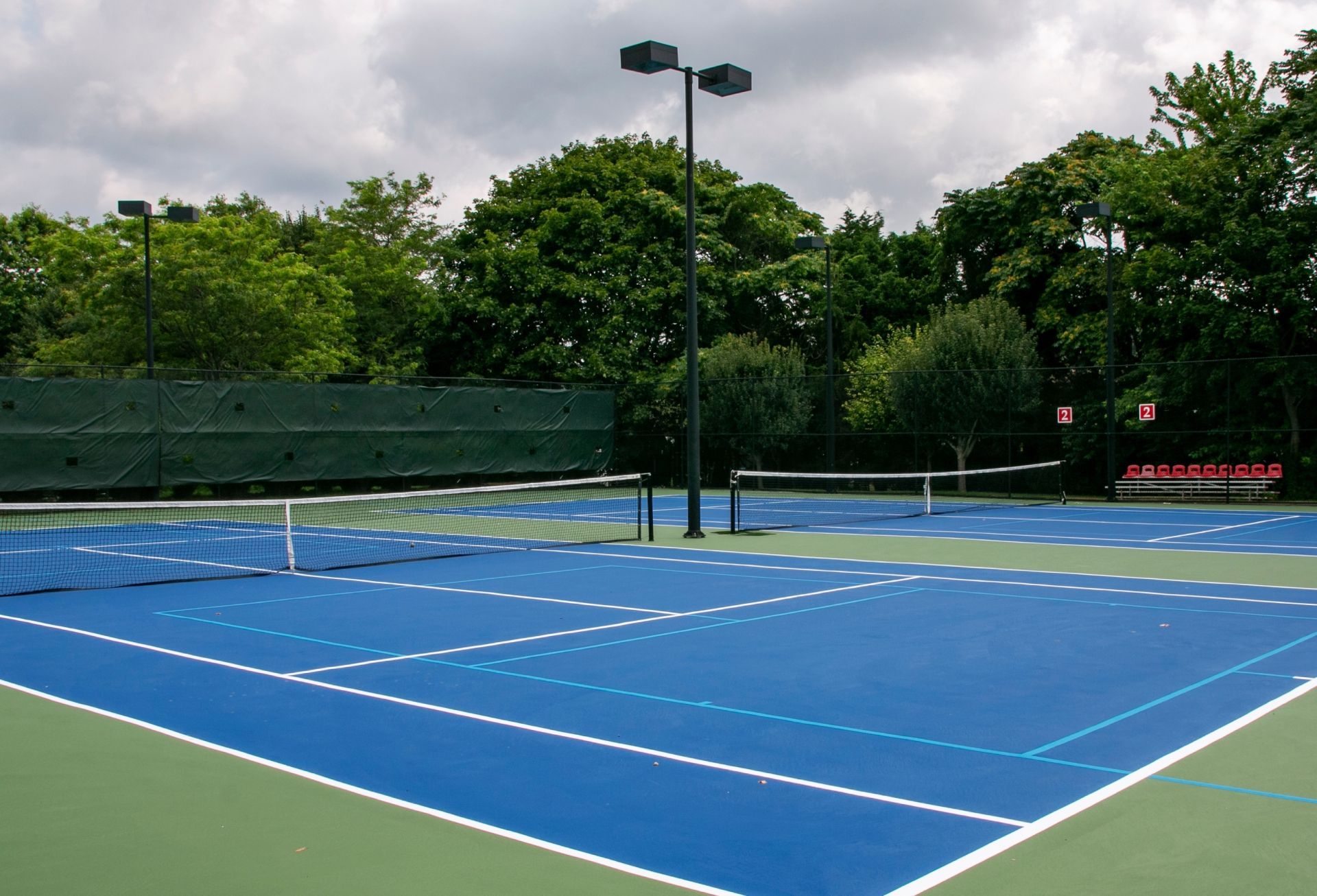
West Georgia Contractors LLC provides pickleball court construction services in Atlanta, GA and throughout Georgia, South Carolina, North Carolina and Tennessee, helping property owners develop dedicated outdoor playing areas as part of residential, commercial, institutional, and recreational projects. A successful pickleball court project requires more than a slab and painted lines. The location, grading, drainage, foundation, playing surface, fencing, net system, lighting, and surrounding space all need to work together.
As a licensed general contractor with experience in concrete construction, site development, demolition, and project coordination, we can help manage the construction requirements involved in developing a new pickleball court.
Pickleball Court Construction Services
From a private backyard court to a multi-court recreational facility, every project begins with understanding the property and determining what construction approach makes sense.
Our pickleball court projects can include coordination of:
- Site evaluation and preparation
- Clearing and excavation
- Grading and drainage
- Concrete or asphalt court bases
- Court surfacing
- Pickleball court striping
- Net and post installation
- Perimeter fencing
- Access gates
- Windscreens
- Court lighting
- Seating and player areas
- Shade structures and other amenities
- Surrounding concrete improvements
- Project management and trade coordination
The exact scope depends on the property, number of courts, intended use, existing site conditions, and features selected for the finished facility.
Residential Pickleball Court Construction
Adding a pickleball court to a home can create a dedicated space for exercise, recreation, and entertaining family and friends. A residential court needs to be planned around the existing property rather than simply placed wherever there is an open area. Available space, trees, slopes, drainage, access for construction equipment, landscaping, fencing, and proximity to the home can all influence the project. West Georgia Contractors LLC can help coordinate the construction work necessary to transform an appropriate portion of a residential property into a dedicated pickleball playing area. Residential projects may include:
Backyard Pickleball Courts
A dedicated backyard court provides a permanent place to play without relying on public recreation facilities or temporary court markings.
Custom Court Layouts
Your court can be planned around the property’s available space, surrounding improvements, access points, and desired amenities.
Multi-Sport Areas
For properties where space is limited, a court area can potentially be designed for multiple recreational uses, depending on the desired layout and project requirements.
Court Improvements and Amenities
Fencing, gates, lighting, seating, shade, landscaping, and surrounding hardscape can be incorporated into the overall property improvement plan.
Commercial and Community Pickleball Courts
Pickleball courts can be valuable amenities for properties that serve residents, members, employees, students, guests, or the general public.
We can coordinate construction projects for:
- Apartment and condominium communities
- Homeowners associations
- Country clubs
- Fitness and recreation facilities
- Hotels and resorts
- Schools and educational properties
- Parks and recreation facilities
- Commercial developments
- Community centers
- Senior living communities
- Institutional properties
Multi-court facilities require additional planning for circulation, fencing, lighting, spectator areas, drainage, parking access, and overall site layout.
For larger projects, our general contracting experience allows the court development to be coordinated with other construction or site improvements occurring on the property.
Pickleball Court Site Preparation
The condition of the site beneath a court has a direct impact on the finished project. Before a playing surface is installed, the property may require clearing, excavation, grading, base preparation, drainage improvements, or removal of an existing surface. This is particularly important when converting an unused portion of a property into a permanent court. Our site preparation services can address:
Excavation
Unsuitable material, vegetation, old pavement, or other obstacles may need to be removed before construction begins.
Grading
The court area must be established at appropriate elevations while accounting for water movement and surrounding property grades.
Base Preparation
A stable base supports the finished court and helps create the foundation required for the selected construction system.
Drainage Planning
Rainwater needs a path away from the playing surface. Proper grading and drainage can help reduce standing water and protect the court from premature deterioration.
Site Access
Construction equipment, concrete deliveries, material storage, and worker access all need to be considered before work begins.
Pickleball Court Concrete and Base Construction
The playing surface is only as reliable as the structure beneath it.
Outdoor pickleball courts can be constructed over concrete or asphalt bases, with the appropriate specifications determined by the project design and surfacing system. USA Pickleball identifies both concrete and asphalt as acceptable base materials while emphasizing the importance of proper slope, drainage, and surface preparation.
West Georgia Contractors LLC brings concrete construction and site-development experience to the structural portion of the project.
Our team can coordinate the preparation and installation of the court base as part of the larger construction scope, helping ensure the site is ready for the specialized sport-surfacing phase.
Pickleball Court Surfacing
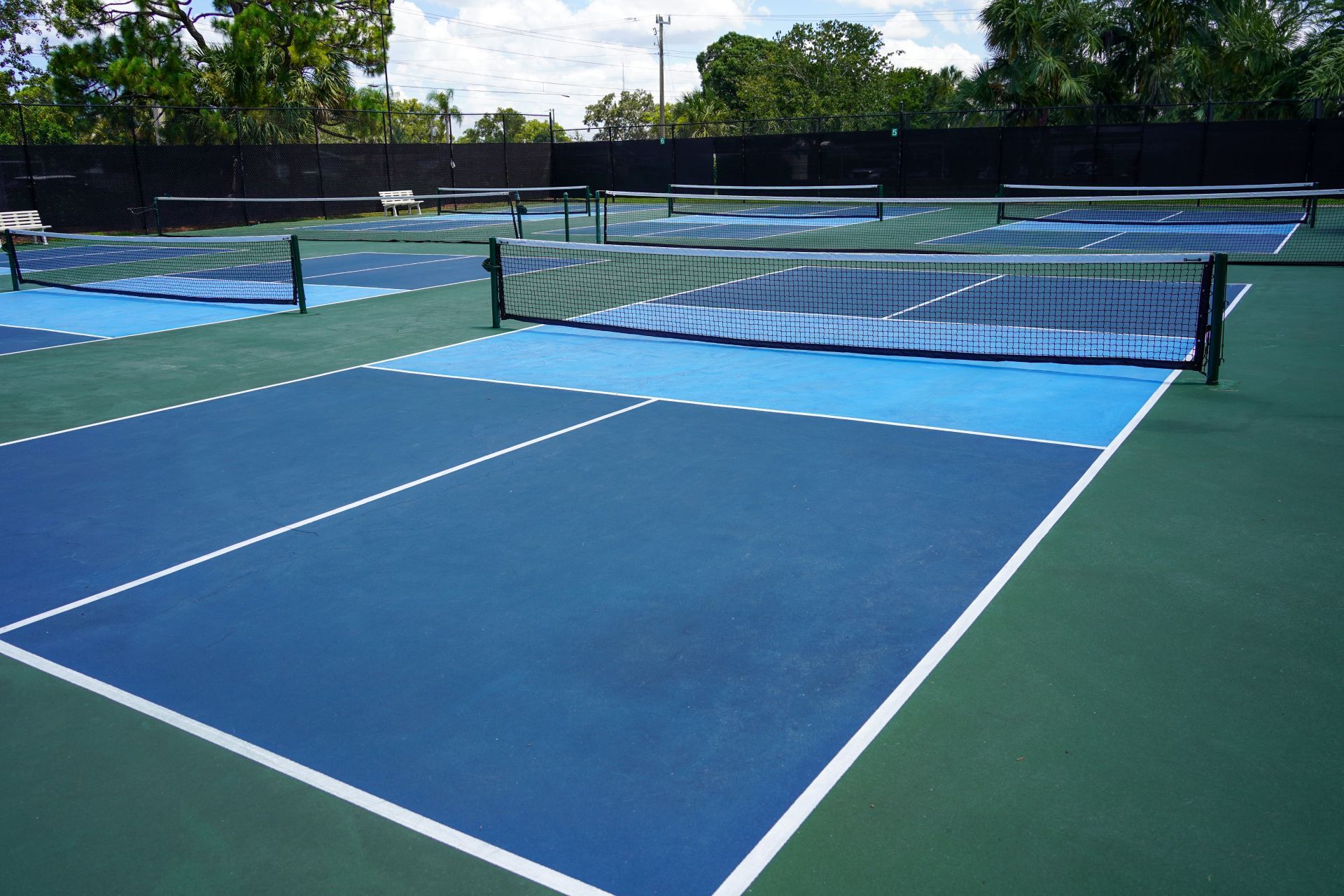
A pickleball court needs a playing surface that provides consistent ball response, traction, and visibility while standing up to outdoor exposure.
Professional outdoor courts commonly use acrylic sport-surfacing systems installed over a properly prepared hard surface. USA Pickleball recommends 100% acrylic coatings for pickleball and athletic court surfacing.
The appropriate surface system depends on factors such as:
- Existing base condition
- New construction versus renovation
- Expected frequency of use
- Desired playing characteristics
- Climate and weather exposure
- Maintenance expectations
- Color and appearance
- Project budget
Surface colors can also be selected to create visual contrast between the playing area and surrounding zones, helping players track the ball more easily.
Tennis court fencing helps keep balls contained while defining the playing area and providing security around the court.
We can coordinate fencing as part of a complete tennis court construction project, with the final fence layout, height, materials, gates, and other specifications determined by the property and intended use.
If you want to use your court during evenings or extend available playing hours, a properly designed lighting system can make the court more functional.
Lighting can be incorporated into the overall project plan for residential courts, community facilities, clubs, schools, and other properties where nighttime play is desired.
Court Fencing
Tennis Court Lighting
Pickleball Court Dimensions and Layout
A regulation pickleball court measures 20 feet wide by 44 feet long for both singles and doubles play. However, the actual construction area needs to be larger than the painted playing lines.
USA Pickleball recommends a minimum total playing surface of approximately 30 feet by 60 feet, while additional space may be desirable depending on the facility, surrounding fencing, player movement, and project design.
The court layout includes:
- Baselines
- Sidelines
- Centerline
- Service areas
- Non-volley zone, commonly called the “kitchen”
- Net system
Court orientation can also matter for outdoor play. When site conditions allow, a north-south orientation can help reduce the impact of direct sunlight on players.
For multi-court developments, the overall property requirements increase significantly because additional room is needed between courts, around the perimeter, and for circulation and amenities.
Pickleball Court Fencing and Windscreens
Fencing serves several purposes around a dedicated pickleball facility.
It helps contain balls, establishes the boundaries of the recreational area, provides a degree of security, and can separate the courts from adjacent property uses.
Depending on the project, fencing may include:
- Perimeter fencing
- Court divider fencing
- Pedestrian gates
- Service gates
- Windscreens
- Privacy screening
Windscreens can also be incorporated when reducing wind exposure or increasing privacy is important to the property owner.
The appropriate fencing configuration depends on the number of courts, property layout, intended use, surrounding structures, and local project requirements.
Pickleball Court Lighting
Lighting allows courts to remain available after daylight hours and can significantly expand the usability of a residential or commercial facility. However, lighting a pickleball court requires more than simply placing lights around the perimeter.
Because pickleball involves rapid ball movement and frequent changes in direction, uniform illumination and glare control are important considerations. USA Pickleball specifically recommends high-quality lighting designed to provide consistent illumination while minimizing shadows and glare.
Lighting projects may involve:
- Light poles
- LED fixtures
- Electrical service
- Underground conduit
- Pole foundations
- Fixture placement
- Individual court controls
- Lighting controls
Lighting can be planned as part of the initial court construction project or incorporated into a broader property improvement plan.
Pickleball Court Amenities
A dedicated court can be designed as part of a larger recreational environment rather than functioning as an isolated playing surface.
Depending on the property and project goals, additional features can include:
- Player benches
- Spectator seating
- Shade structures
- Water access
- Ball storage
- Windscreens
- Court dividers
- Landscaping
- Walkways
- Gathering areas
- Equipment storage
For community and commercial developments, these features can help turn several courts into a complete recreational amenity.
New Pickleball Court Construction vs. Court Conversion
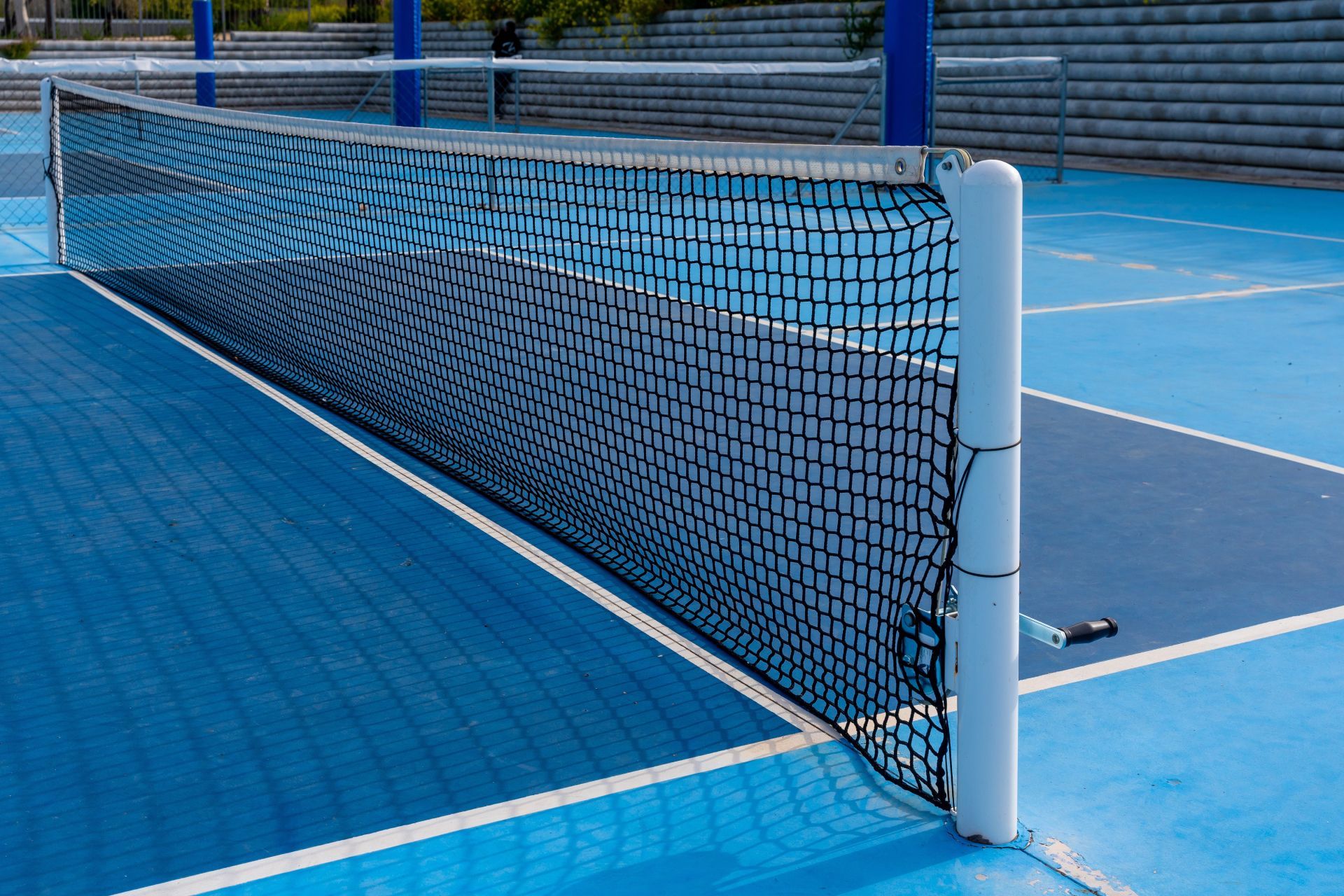
A new court does not always require building on completely undeveloped property. Existing paved areas, unused recreational spaces, tennis courts, and other hard-surface areas may sometimes be candidates for conversion depending on their size, condition, drainage, elevation, and intended layout.
Converting an Existing Tennis Court
An existing tennis court can potentially accommodate multiple pickleball courts, depending on the layout and available playing area.
The conversion process may involve:
- Evaluating the existing surface
- Repairing cracks or damaged areas
- Checking drainage
- Resurfacing
- Installing new pickleball lines
- Adding or modifying fencing
- Installing pickleball nets
- Updating lighting
Adding court dividers or windscreens
Whether conversion is appropriate depends on the existing court’s condition and the goals of the facility.
Building on an Existing Hard Surface
Some properties may have concrete or asphalt areas that could potentially be adapted for pickleball.
Before beginning construction, the existing surface should be evaluated for cracking, settlement, drainage, slope, and overall suitability for a professional court surface.
Tennis court fencing helps keep balls contained while defining the playing area and providing security around the court.
We can coordinate fencing as part of a complete tennis court construction project, with the final fence layout, height, materials, gates, and other specifications determined by the property and intended use.
If you want to use your court during evenings or extend available playing hours, a properly designed lighting system can make the court more functional.
Lighting can be incorporated into the overall project plan for residential courts, community facilities, clubs, schools, and other properties where nighttime play is desired.
Court Fencing
Tennis Court Lighting
Pickleball Court Construction for Georgia’s Climate
Outdoor recreational surfaces in Georgia are exposed to intense sunlight, heat, humidity, heavy rainfall, and seasonal weather changes.
Those conditions make water management and proper construction particularly important.
A pickleball court should be planned with the site’s existing elevations and drainage patterns in mind. Surface materials and coatings should also be selected and installed according to the manufacturer’s requirements.
Because West Georgia Contractors LLC works on construction and site-development projects throughout Georgia, our team understands the importance of preparing the site properly before the finished recreational surface is installed.
A Better Approach to Pickleball Court Construction
A pickleball court project involves several different components, and coordinating those components correctly can make the construction process much easier.
West Georgia Contractors LLC approaches the project from a general-contractor perspective.
Instead of treating the court as an isolated surface installation, we can coordinate the broader construction requirements, including site preparation, concrete work, grading, drainage, demolition, and specialized trades.
That approach is particularly useful when the pickleball courts are part of a larger residential, commercial, community, or property-development project.
Our Pickleball Court Construction Process
1. Project Consultation
We discuss the intended use of the court, property, desired number of courts, available space, and project goals.
2. Site Assessment
The proposed location is evaluated for access, grades, existing surfaces, drainage, vegetation, and other construction considerations.
3. Construction Planning
The project scope is established, including the base, surfacing, fencing, lighting, equipment, and surrounding improvements.
4. Site Preparation
The property is cleared, excavated, graded, and prepared for the selected court construction system.
5. Base Construction
The concrete or asphalt base is constructed and prepared according to the project specifications.
6. Sport Surfacing
The selected pickleball court surfacing system is installed over the prepared base.
7. Court Layout and Equipment
Playing lines, net posts, nets, gates, fencing, and other court components are installed.
8. Lighting and Amenities
Optional lighting, seating, shade, windscreens, walkways, and other amenities are completed.
9. Final Project Review
The completed court and surrounding improvements are reviewed before the project is turned over for use.
Tennis court fencing helps keep balls contained while defining the playing area and providing security around the court.
We can coordinate fencing as part of a complete tennis court construction project, with the final fence layout, height, materials, gates, and other specifications determined by the property and intended use.
If you want to use your court during evenings or extend available playing hours, a properly designed lighting system can make the court more functional.
Lighting can be incorporated into the overall project plan for residential courts, community facilities, clubs, schools, and other properties where nighttime play is desired.
Court Fencing
Tennis Court Lighting
Why Choose a General Contractor for a Pickleball Court Project?
A pickleball court may look simple when finished, but the construction process can involve excavation, grading, concrete, drainage, fencing, electrical work, surfacing contractors, equipment installation, and permitting.
Using a general contractor can provide a central point of coordination for the construction work.
West Georgia Contractors LLC is based in Atlanta and is licensed to perform general contracting work in Georgia, North Carolina, South Carolina, and Tennessee. The company’s existing construction capabilities include concrete, demolition, site improvements, residential construction, commercial construction, and project coordination.
For property owners developing a new recreational amenity as part of a larger construction or improvement project, that broader construction experience can be valuable.
Pickleball Court Construction for Homes, Communities and Businesses
Whether you’re adding one court to a private property or planning a larger recreational facility, the project should be designed around how the space will actually be used.
For homeowners, that may mean creating a convenient backyard recreation area.
For an HOA or multifamily community, it may mean developing a shared amenity for residents.
For a commercial or institutional property, the goal may be to create a durable recreational facility that can accommodate regular use.
Whatever the application, careful planning at the beginning can help create a court that fits the property and provides years of recreational use.
Frequently Asked Questions About Pickleball Court Construction
How big is a pickleball court?
The official playing area for a pickleball court is 20 feet wide by 44 feet long for both singles and doubles play. Additional space is required around the playing area for safe movement, fencing, access, and other construction considerations.
How much space do I need for a backyard pickleball court?
USA Pickleball recommends a minimum total playing surface of approximately 30 feet by 60 feet. A larger area may be preferable depending on the property, fencing, player clearance, landscaping, and amenities.
Can you build a pickleball court in my backyard?
A residential pickleball court may be possible when the property has sufficient space and suitable site conditions. The location should be evaluated for grading, drainage, access, existing landscaping, and construction requirements before work begins.
What is the best base for a pickleball court?
Concrete and asphalt are both commonly used as bases for outdoor pickleball courts. The appropriate option depends on the site, project specifications, drainage, surfacing system, and intended use.
What surface is used for pickleball courts?
Professional outdoor pickleball courts commonly use acrylic sport-surfacing systems over a properly prepared hard base. USA Pickleball recommends 100% acrylic coatings for pickleball and athletic courts.
Can you convert a tennis court into pickleball courts?
Yes, an existing tennis court may potentially be converted to accommodate pickleball courts. The feasibility depends on the existing court’s dimensions, surface condition, drainage, fencing, and desired number of pickleball courts.
Can pickleball courts be built for an HOA or apartment community?
Yes. Pickleball courts can be developed as recreational amenities for HOAs, multifamily properties, residential communities, and other shared-use facilities.
Can you build multiple pickleball courts?
Yes. Multi-court projects can be planned for communities, clubs, schools, recreation facilities, commercial properties, and institutional facilities. Larger developments require additional consideration for court spacing, circulation, fencing, lighting, drainage, and spectator areas.
Do pickleball courts need drainage?
Proper drainage is an important part of outdoor court construction. Water should be directed away from the playing surface to help protect the court and surrounding construction from prolonged water exposure.
Can pickleball courts have lights?
Yes. Court lighting can be incorporated into the project to extend playing hours. Proper lighting should provide consistent visibility while limiting glare and shadows.
Can you add fencing around a pickleball court?
Yes. Perimeter fencing, gates, divider fencing, and windscreens can be incorporated depending on the property’s layout and the intended use of the facility.
How much does it cost to build a pickleball court?
There is no single price for pickleball court construction because site preparation, grading, drainage, base construction, surfacing, fencing, lighting, permits, accessibility, and other project requirements can substantially affect the total. A site-specific estimate is the best way to determine the actual construction cost.
Do you build indoor pickleball courts?
Pickleball facilities can be constructed in both indoor and outdoor environments, but indoor projects involve different requirements for flooring, lighting, building systems, ventilation, and space planning. Discuss your facility with our team to determine the appropriate construction scope.
What areas do you serve?
West Georgia Contractors LLC is based in Atlanta and provides construction services throughout Georgia, North Carolina, South Carolina, and Tennessee.
Start Planning Your Pickleball Court
A dedicated pickleball court can add recreational value to a home, community, commercial property, school, club, or other facility. West Georgia Contractors LLC can help coordinate the construction requirements involved in developing the court, from site preparation and concrete construction to surfacing, fencing, lighting, and surrounding improvements. If you’re considering a new pickleball court or converting an existing recreational area, contact West Georgia Contractors LLC to discuss your property and request a project estimate.
Call (404) 454-4424
or request a quote today.